

I’ve finished coding the case study interviews. Hoorah! As I’m writing up findings, I’ve been reflecting a lot about so many of the coding challenges I have debated with myself and several other colleagues. There have been some wonderfully robust discussions about evidence-based practice, and how to check that we are actually offering the best possible service to clients. It’s definitely challenging for clinicians in practice, and also from an academic research perspective.
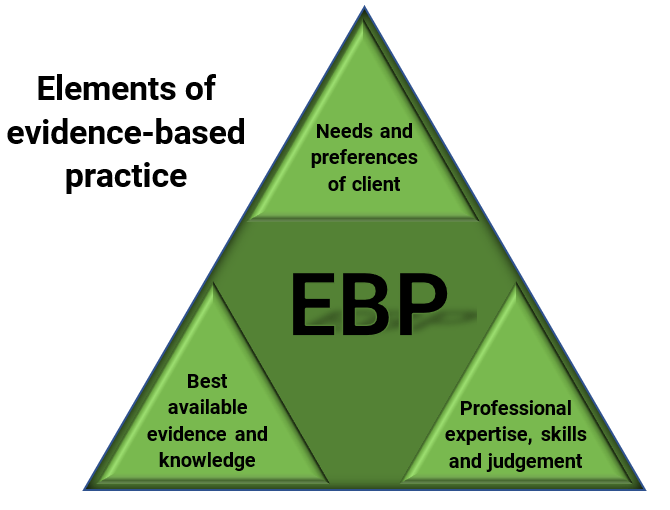
A colleague reminded me of the EBP triad. I had totally forgotten this little gem. When we think about levels of evidence and offering best practice incorporating EBP, there is often grounds for so much doubt, uncertainty and procrastination. Clinical decisions are based on more than one thing.
I read this article recently, and it resonated with me about the feeling I had from so many perinatal OT practitioners, in their quest to offer best-practice clinical services:
Copley, J. A., Turpin, M. J., & King, T. L. (2010). Information Used by an Expert Paediatric Occupational Therapist When Making Clinical Decisions. 77(4), 249-256. doi:10.2182/cjot.2010.77.4.7
The perinatal OT case study results are beginning to reveal how these passionate OT’s are seeking and drawing together an impressive range of training, clinical reasoning, experience, supervision and mentoring to offer perinatal populations unique, person-centered and evidence-based practices. Anecdotal evidence, research literature of multiple levels and sources, and other formal training and CPD clinicians complete influence the range and quality of professional services OT’s can offer perinatal populations.
What a privilege it is to be capturing a snapshot of how this cohort are doing their bit to improve outcomes for maternal populations in the context of “occupation”. Amazing. Thank you to everyone who participated in this research. I can’t wait to get it out!

 Research & evidence-based practice for OTs in perinatal health, motherhood, and matrescence