
Blog

Co-occupations. Yes, they fit. And they traverse perinatal health, matrescence and paediatric development. And sex?


This Photo by Unknown Author is licensed under CC BY-SA

I’ve been thinking for a long time that someone should develop a model for co-occupations. There are times that we need to improve how we understand, address and nurture the mother-child dyad through shared occupational intentionality and engagement during all daily life routines, in the context of both maternal and child development. There’s a lot that can be addressed in the name of co-occupation.

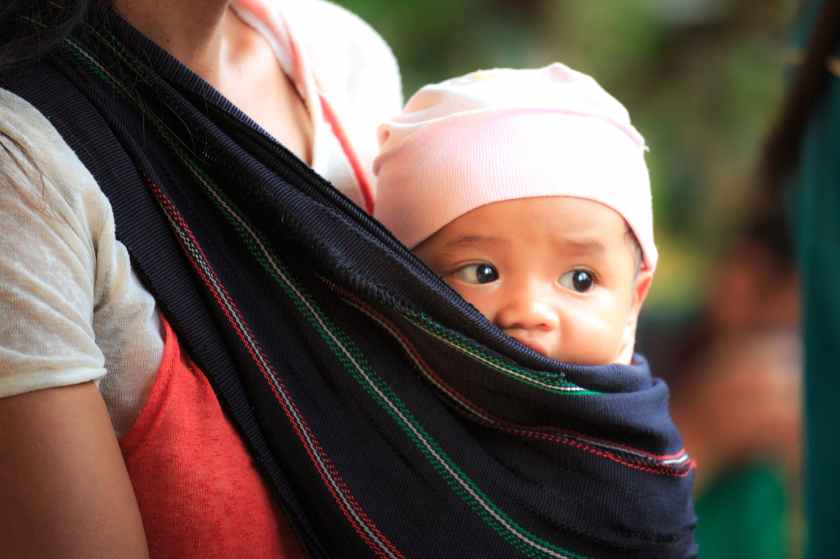
I’ve just stumbled across this image in a creative commons by an unknown author. I wish I knew who made this graphic so I could learn about why they made it and what it means to them. But for me; This is it. This visually conveys the heart of co-occupation and the inseparability of mother-infant dyad. I like that it also reminds us that the mother-infant dyad is not separate from others. Co-parents, partners, other children… whoever is at the heart of the ‘person’ in person-centered care.

It also represents that a person’s sense of self and life meaning expands and shifts when they become a parent, as mothers might experience during matrescence, and fathers during patrescence. We begin to think of others more in our occupational engagement, and the meaning for them with actions and participation becomes part of the meaning for us.

On a side note, I did start to wonder about which co-occupations which OT’s would address as part of women’s health during motherhood stages. Is sex a co-occupation? I think it might be. The OT textbooks are usually all about sex in the context of a person managing issues due to disability and physical dysfunction, but I did recently stumble across an person-centered OT model titled, “The Occupational Therapy Sexual Assessment Framework” (Walker, et al, 2020, p. 5), which seemed a bit more flexible. So interesting. I’m not sure that this is part of this PhD, but I do think there’s grounds to consider this at some point. Later. Maybe.

It’s easy to get the impression that co-occupations are difficult to understand and challenging to integrate into practice in a meaningful way. There are many OT’s who have adapted co-occupations into their practice, but many more haven’t. Without knowing how to contextualise the place and value of co-occupations in person-centered care, it’s difficult. Doidge (2012) completed and published a PhD thesis is available on co-occupations in motherhood, which is brilliant. There’s a link to it in my “Library“. There’s also Esdaile and Olsen’s (2004) textbook about mothering occupations, which talks frequently about co-occupations. The more we use words like co-occupations and matrescence, the more they start to become part of our vernacular, which changes the way we conceptualise and practice. We’re on the way, aren’t we?

I’m so close to being finished my thesis now, and I can’t wait to share the findings. I am so grateful to the OT and consumer participants who shared their experiences, thoughts and perspectives for the PhD. And to the patient and generous people who have talked with me since to help me make sense of what it all means. I can’t wait to share my research. I truly hope others can enjoy learning how amazing these OT’s are in their roles supporting women address health issues and wellbeing needs throughout perinatal stages and matrescence as much as I have.

References:

Doidge, K. (2012). Co-occupation categories tested in the mothering context. (Master of Occupational Therapy), Otago Polytechnic, Dunedin, New Zealand.

Esdaile, S. A., & Olsen, J. A. (Eds.). (2004). Mothering occupations: Challenge, agency and participation. Philadelphia, USA: F. A. Davis Company.

Walker, B., Otte, K., LeMond, K., Hess, P., Kaizer, K., Faulkner, T., & Christy, D. (2020). Development of the Occupational Performance Inventory of Sexuality and Intimacy (OPISI): Phase One. The Open Journal of Occupational Therapy, 8(2), 1-18. https://doi.org/10.15453/2168-6408.1694
OT’s are experts in life transitions. Right? So, let’s talk about ‘matrescence’. #perinatalOT #matrescence

Before I can open this conversation, I feel the need to acknowledge that the COVID pandemic has impacted us all. Our lives have all been touched by this viral bomb in different ways and to various degrees, and we are all adjusting to a new world that we weren’t quite ready for. This journey isn’t over yet, and I hope that people are able to reach out and access the supports and resources they need to get through this incredibly unique and challenging time. I took some time away from my PhD to focus on my family, which I was fortunate to have been able to do. And now I’m lucky enough to be able to come back to it for the final sprint.

I am thankful the OT working in private practice who reached out to me recently after reading this blog. Having a chat with her reminded me that my research is important and needed, and that it’s time to roll up my sleeves and follow my heart again. She reminded me of the pressure that we feel as practitioners to ensure our practices align with research for evidence-based practice confidence, and that the EBP triad elements needs balance. It was the conversational kick I needed. I believe in the role of OT in supporting women during perinatal phases, motherhood transitions and matrescence, and I hope that my research contributes knowledge that can be useful in helping this specialist field to continue evolving with integrity. So, let’s get going…

One of my favourite occupational therapy conceptual framework approaches is Wilcock’s (1998) ‘doing, being and becoming’, which I think so naturally fits into the adjustment process we need to make as human-beings experiencing challenging and/or transformative life transitions. One of my OT colleagues refers to this as the “fake it ’til you make it” philosophy, which always makes me chuckle and nod. OT’s are great at using occupation to help people move and grow through life transitions. For mothers, this also extends to including co-occupations such as play, feeding and bathing for developing a sense of maternal skill acquisition and competence.

In Switzerland there’s a specialist role for occupational therapists titled “Erledigungsblockade”. A few years ago, I was unbelievably lucky enough to have a hallway conversation with the President of the Association of Occupational Therapists Switzerland. She was incredibly generous with listening about my research and shared information about the OT role with me. In now second-hand layman terms, I understand that this OT role is well established and supports people needing to work through “blockades” interrupting their lives so that they can return to their usual self and state of being (Joss, 2011). It conceptually reminds me of the KAWA model approach, however I’ve not yet been able to learn as much about it as I would like.

I think it’s important to mention these when we’re thinking about the OT role in supporting women through their motherhood transitions and with perinatal health issues. The role of OT is culturally defined to some extent, and so too is the way we understand women’s maternal health, well-being, issues and needs. Looking at maternal health from a sociological, development and anthropological perspective through the lens of matrescence brings some good conversation starters for a round-table OT debate.

A quote I read recently which made me laugh and think was from a collection of pivotal anthropological papers addressing motherhood:

Giving birth to a child does not automatically unleash a previously contained flood of maternal behaviour. Nor… does it determine when a woman becomes a mother. The process of matrescence includes a subtle, supportive process of socialization into motherhood. In many cultures and for most women becoming a mother is their most dramatic life crisis (Newman, 1975, p. 9)

I think this quote summed up for me where OT’s have a place in maternal transitions, perinatal health and matrescence. Two articles I read recently by Blair (2000) and Schwartzman (2006) reminded me that OT’s are specialists in supporting people through life transitions, in both the presence and absence of illness, disease and disability. OT’s have a role to play in health promotion, preventing issues and nurturing self-actualisation and personal development by using occupation. It directly applies to perinatal OT practice, but the reality is that OT’s want validation for the practice decisions from directly relevant research about the role of OT in perinatal health.

There are so many resources available to support women with perinatal health issues – including occupational therapy! – but what do we know about the OT role in supporting women through matrescence? Is it even a thing? I think it is. Is it different to the OT role in perinatal health? I’m not sure yet.

Pascoe Leahy & Bueskens (2020) recently published a textbook which has blown my mind. I practically read it from cover to cover in a weekend, and my understanding of matrescence and the role for occupational therapy has never been clearer. I have come to think of it as the missing link in my research which has made everything suddenly make sense. The authors talk about time use for mothers, changes in women’s sense of identity and meaningful engagement, and concepts which I regard as absolutely core to OT practice. Unsurprisingly there is no reference to OT, but they’re speaking our language and it translates easily and naturally. When you couple this with Esdaile & Olsen’s (2004) textbook about mothering occupations and everything we already know about occupational therapy and occupational science, the pieces fit and the OT role and scope of practice potential is clear.

I write this knowing that it may be a difficult to relate to, but exploring the OT role in women’s maternal health is a wonderful academic adventure for me. There’s so much to learn, uncover and unpack, and translating the knowledge into something accessible for OT’s to use in practice is always on my to-do list. I hope someone might be able to read this and feel encouraged to reflect and explore new ways of applying EBP concepts to clarify, measure and evaluate their practice. We’re getting there.

References:

Blair, S. E. (2000). The centrality of occupation during life transitions. British Journal of Occupational Therapy, 63(5): 231-237, doi.org/10.1177/030802260006300508

Esdaile, S. A., & Olsen, J. A. (Eds.). (2004). Mothering occupations: Challenge, agency and participation. F. A. Davis Company.

Joss, B. (2011). Beeinträchtigung im Beruf durch Erledigungsblockade. http://tl.dieergopraxis.ch/tl_files/ergopraxis/dokumente/EB%20Berufliche%20Beeintraechtigung%20.pdf

Pascoe Leahy, C., & P. Bueskens, P. (Eds.), Australian Mothering: Historical and Sociological Perspectives. Cham: Palgrave Macmillan, USA

Newman, L. (1975). Reproduction: Introductory notes. In D. Raphael (Ed.), Being Female: Reproduction, Power, and Change (pp. 7-12). The Hauge: Mouton Publishers.

Schwartzman, A. J., Atler, K., Borg, B., & Schwartzman, R. C. (2006). Fueling the Engines: A Role for Occupational Therapy in Promoting Healthy Life Transitions. Occupational Therapy in Health Care, 20(1), 39-59. https://doi.org/10.1080/J003v20n01_03

Wilcock, A. A. (1998). Reflections on doing, being and becoming. Canadian Journal of Occupational Therapy, 65, 248-256.

Matrescence or perinatal? How language choices define our understanding of women’s journeys to motherhood

Becoming a mother is known to be a significant life event for women. It means different things to different women in different communities and cultures, in a kaleidoscope of ways. An increasing number of occupational therapists around the world are working to support women’s unique and individual issues and needs as they become mothers. They identify occupational performance issues women experience during these life transitions, and ways to support women according to client-centered and evidence-based practice principles.

Recently I’ve been preoccupied with wondering about our professional vocabulary. In the same way we’ve been debating the appropriateness of the term “occupation” to describe what type of therapy we provide, I wonder if we should redirect some of that curious energy to question the words we use to understand maternal health? What influence does the language we use to interpret and understand the role of occupational therapy in supporting women during the transition to mother? How does the terminology we use influence our clinical practice decisions? Are we limiting our professional knowledge acquisition by feeling obligated and bound to using medical definitions of maternal healthcare models and systems?

How do the words we use and choose shape our understanding of the OT role in women’s maternal health?

Words we use to understand women as they become mothers.

Occupational therapists work with women during so many stages of their journeys to and through motherhood. For me, the more I learn about ‘matrescence’, the more I feel clear about it’s relevance to the occupational therapy role in women’s health during motherhood transitions. I’m still learning – there’s a lot to learn! – but I want to share moments of my knowledge journey in discovering this term, including how it changes my thoughts and perspectives on both women in the context of becoming a mother, and the occupational therapists who support them. I hope that sprinkling little ‘new’ knowledge kernels might help occupational therapists to perpetuate their curiosity and question their understanding, familiarity and confidence in using and applying a professional vocabulary which is true and authentic to their practice.

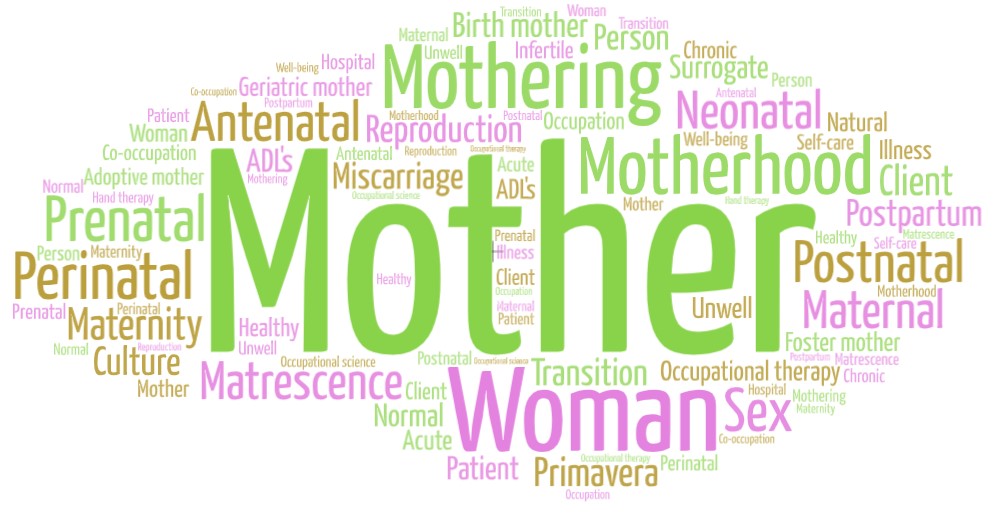
Let’s start with the basics and tackle things bit by bit… Here’s my current interpretation of some key terms I’ve noticed occupational therapists are using to describe their practice and clients, and some I use when I’m listening to their stories:

Motherhood: A life phase/chapter of being a mother

Mothering: The duties and tasks of mothering occupations

Mother: A person who identifies themselves as such

Perinatal: There are a handful of definitions for this term, which describes a period from late pregnancy through to early postpartum. This term was originally developed for using medical maternal health and obstetrics, and includes prenatal, antenatal, labour, birth, postpartum and postnatal (the three trimesters, [arguably four: https://jordaninstituteforfamilies.org/collaborate/community-initiatives/4thtrimesterproject/]).

From what I’ve heard and learned along the way, I am currently considering that ‘perinatal’ is part of matrescence. I wonder; How much has our respect for and value of medical terminology biased how we understand women’s health and wellbeing when becoming mothers? Are we allowed to look outside the obstetric and medical definitions of maternal health and perinatal status to better understand how occupational therapists interpret and address women’s issues and needs? Yes. I think we can.

Matrescence: Refers to the developmental transition of becoming of mother (likened to the term ‘adolescence’, for becoming an adult). Originally developed and used exclusively by anthropologists. In the last 10-15 years is being revived and refreshed by sociologists and psychologists to interpret women’s maternal health and mothering in contemporary societies.

“The process of becoming a mother, coined by Dana Raphael, Ph.D. (1973), is a developmental passage where a woman transitions through pre-conception, pregnancy and birth, surrogacy or adoption, to the postnatal period and beyond. The exact length of matrescence is individual, recurs with each child, and may arguably last a lifetime! The scope of the changes encompass multiple domains –bio-psycho-social-political-spiritual– and can be likened to the developmental push of adolescence”, Aurélie Athan, Ph.D.

“An experience of dis-orientation and re-orientation . . . in multiple domains: physical (changes in body, hormonal fluctuations); psychological (e.g., identity, personality, defensive structure, self-esteem); social (e.g., re-evaluation of friendships, forgiveness of loved ones, gains in social status, or loss of professional status), and spiritual (e.g., existential questioning, re-commitment to faith, increased religious/spiritual practices)” (Athan & Reel, 2015, p. 9).

I’m going to leave this post hanging without drawing any major conclusions. I hope that by doing this there might be cause to wonder what should be written next.

What do you think? Does this resonate with occupational therapy conceptual philosophies as you understand them?

Sleeves are rolled up, and more blog posts are coming…

References, and links for the curious:

Aurélie Athan, Ph.D. – Webpage: https://www.matrescence.com/

Athan, A., & Reel, H. L. (2015). Maternal psychology: Reflections on the 20th anniversary of Deconstructing Developmental Psychology. Feminism & Psychology, 25(3), 311-325. https://doi.org/10.1177/0959353514562804

Book – Raphael, D. (1975). Matrescence, Becoming a Mother, A “New/Old” Rite de Passage. In D. Raphael (Ed.), Being Female: Reproduction, Power, and Change (pp. 65-72). Mouton Publishers.

The price of supporting women’s occupational wellbeing and holistic needs during perinatal transitions: Is it reasonable? Is it possible? Is it worth it?

Occupational therapists have a unique lens in how they interpret and address client’s issues, needs and goals. We use a number of frameworks, and pride ourselves in problem-solving with the bigger picture in mind. Because of this, we often pick up the subtle issues impacting a person’s wellbeing and capacity for occupational participation, performance and engagement, and we’re prepared to explore whatever solutions seem right for that person. Which other profession could have come up with basket-weaving as a successful occupation-based intervention to promote functional wellbeing for returned war veterans? Probably none. OT’s own this area of specialist practice.

As occupational therapists, we listen, we learn, we upskill, we adapt, we deliver, and we help people achieve their goals in whatever way is right for them. The occupational therapists supporting women journeying through perinatal transitions are emulating this practice philosophy. They have important messages to share with us all about what women need from an occupational therapists’ perspective, and I feel such an ethical obligation to respect how participating in this research opportunity offers a platform for their voices to be heard.

More and more, the richness and depth of the case study interviews are inspiring me to reflect on the capacity of occupational therapists to elicit information and uncover underlying issues which impact on maternal wellbeing, which are important, and need to be addressed. The enormity of these factors are coming to light from the case study data, as is the scope and scale of issues impacting women’s wellbeing during perinatal transitions. It made me reflect this morning: If we listen and take on what the OT’s and women are saying, and truly respect these issues as serious, valid and important – and worthy of being addressed under the umbrella of perinatal maternal and child health – do we have the health funding and resources available to address them? It seems like a big ask.

One of my favourite articles about occupational therapy’s economic value and impact on health outcomes for populations is by Rexe, McGibbon Lammi & von Zweck (2013). It talks about how occupational therapy adds value to multidisciplinary teams in a way that is flexible, economically smart, and sustainably viable. I love it.

I often remember the very first article I read by Seefat-van Teeffelen, Nieuwenhuijze, & Korstjens (2011), which recognised women’s needs in maternal health were holistic and challenging for existing healthcare teams to adequately address at times. I’ve learned so much about co-occupations and matrescence, and see how the bio-psycho-social-political-spiritual framework to interpret maternal development enhances occupational therapist’s understanding of life transitions. Now, even more than before, I hold true to the position statement on the place for occupational therapists in maternal health services, and I’m starting now to question:

  1. How would this role be funded?
  2. How can women’s holistic wellbeing be recognised, respected and valued enough for it to become a priority?
  3. How can we measure the outcomes for women receiving input from occupational therapy to demonstrate its worth?
  4. How will there to be funding allocated to address these needs?
  5. Where would we fit?
  6. Would others have to make way for us to be there? And if so, would the costs outweigh the benefits?

There are so many questions building from these case studies.

Again, I thank all of the case study participants for being so generous with the information and experiences they shared with me for this research. I’m blown away by the professionalism, integrity and dedication of these individuals, and I believe in their work. I can’t wait to share what we need to know about the role of occupational therapy in maternal health. It’s pretty impressive, and it’s incredibly important.


References

Doidge, K. (2012). Co-occupation categories tested in the mothering context. (Master of Occupational Therapy). Otago Polytechnic, Dunedin, New Zealand. Full text thesis available from here.

Rexe, K., McGibbon Lammi, B., & von Zweck, C. (2013). Occupational Therapy: Cost-Effective Solutions for Changing Health System Need. Healthcare Quarterly, 16(1), 69-75. Full text available from here.

Seefat-van Teeffelen, A., Nieuwenhuijze, M., & Korstjens, I. (2011). Women want proactive psychosocial support from midwives during transition to motherhood: a qualitative study. Midwifery, 27(1), e122-e127. doi:10.1016/j.midw.2009.09.006

Slootjes, H., McKinstry, C., & Kenny, A. (2015). Maternal role transition: Why new mothers need occupational therapists. Australian Occupational Therapy Journal. doi:10.1111/1440-1630.12225

EBP: Is offering a highly tailored person-centred OT service enough to constitute ‘evidence’?

Goodness. It’s been a while between blog updates. Where has the time gone?! Writing up the case studies is proving incredibly time consuming, and getting the structure and content ‘just right’ is a uniquely challenging process that is often uncomfortable and a bit messy.  We know that great things never come from comfort zones, so it’s looking like my thesis is going to be amazing!

Doing a PhD is different to what I imagined it would be. It’s difficult to work out what formulas to follow, and feels impossible to get thing right the first time. Sometimes I just don’t know where to turn to get the answers I’m looking for. And sometimes I don’t realise that I’ve found the answers already, because they’re not what I thought I was looking for – which makes them difficult to recognise until much later than I’ve found them. Eventually I seem to always get there. But it’s not until I’ve waded through the ocean of support, advice and recommendations which comes my way, trying to catch onto the most important clues, hints and tips to get me on the right path. I’ve dusted myself off from so many trips and stumbles on this journey, and I’m constantly learning along the way.

Reminds me of being a new parent, and particularly a first-time mum. The learning process never ends, and it’s difficult to feel like you’ve got things just right. And even when you do, it’s usually short-lived because your child has grown, things have changed, and you need to adapt how you’re managing to make the engine’s run smoothly again and navigate to recover coordinates for the course you’re on. And then repeat.

So how can we support new mum’s through this process? What evidence can we draw on to inform practices and feel confident that the advice and recommendations we’re making constitute EBP?

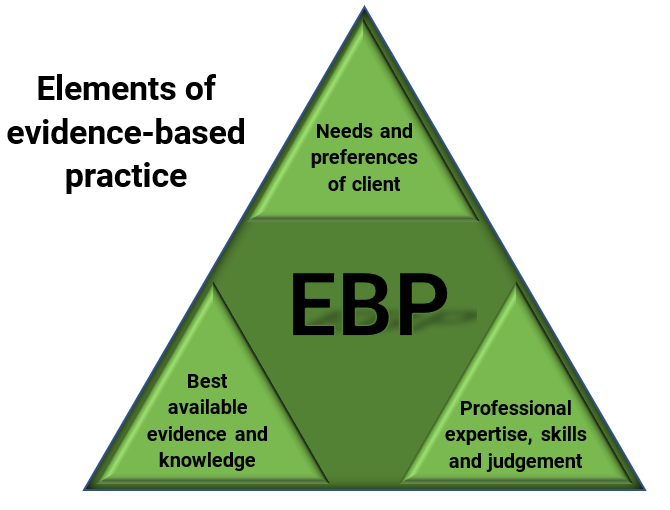
Occupational therapists pride themselves in offering person-centred practice. Reminding ourselves of the EBP triad is critical when we’re reflecting about our practice, and touching base with benchmarks underpinning our professional integrity. When we’re searching for the best available evidence and knowledge in literature, we need to remember this is just one element of EBP. Sometimes the information we find might not match the issues, needs or circumstances of the person whose goals we’re supporting. Do the needs and preferences of any client trump the literature? Is it ‘EBP’ if we offer practices that are not strongly backed by literature because in our professional experience they seem to work?

Reflecting on my clinical practice experiences, the case studies and talking with my colleagues and supervision team, I can’t help but consider that so many OT’s feel a sense of awkwardness and discomfort when they offer interventions and assessments that are not in keeping with recommendations in the latest literature. I know I often do. But more recently I’m starting to realise that EBP is about achieving balance between the three elements in the triad. There’s an art form in tailoring dynamically balanced services to meet a person’s needs to the best of your professional ability – and within professional scope of practice.

Our client’s employ and engage with us to achieve goals that they have chosen, want or need. And most of the time they’re pretty clear about what those goals look like. It’s up to us to make it work. For them.

So many of the OT’s told me in the case studies that the only outcome which matters in EBP is the client achieving a goal in the way that is meaningful and satisfactory to them. It’s easy to see this is person-centred practice. Is it EBP? Yes, I think most definitely so.

EBP triangle

More questions? These articles might offer more food for thought:

Lampe, A., Mu, K., Qi, Y., Wang, Y., Brown-King, K., Moran, B., & Talian, E. (2019). Evidenced-Based Practice (EBP) as Perceived by OTs and PTs. American Journal of Occupational Therapy, 73 (4_Supplement_1) Click here to access

Myers, C., DeMaria, S., & Pomeranz, J. (2019). The Development of Evidence-Based Practice (EBP) Competencies in OT: A Modified Delphi Study. American Journal of Occupational Therapy, 73 (4_Supplement_1). Click here to access

The cogs are turning… call by APA for physiotherapists to join prenatal care teams in Australia! #comeonOT

One of my supervisors sent me link to a press release recently, which was about one of the most exciting things I’ve read this year: “APA calls for physiotherapists to be included in the care teams for pregnant women in Australia”Click to read media release online here. Incredible! What fantastic news for both physio’s and women. This public advocacy represents is a huge shift and step forward for women’s functional and holistic health needs being recognised and respected during pregnancy, birth and the postpartum recovery and adjustment phases. French physiotherapists have long worked in women’s health, and outcomes for French women’s pelvic function seem to reflect the measure of success with this role. So if we know it works, why is taking so long for other countries to include physiotherapists in maternal health care teams in other parts of the world?

On the coattails of RCOT announcing their plan in April this year to invest in perinatal OT’s working in mental health, it really does feel like the cogs of the medicalised perinatal health care models are turning. I dream of a day when the headline I read of a press release is, “OTA calls for occupational therapists to join perinatal health care teams to support women in Australia”. I can’t wait for it. Although a catchier title would be appreciated.

The theme for the upcoming Perinatal Society of Australia and New Zealand (PSANZ) Congress in Sydney next year is “Bridging Gaps in Perinatal Care“. I’m hoping to be able to present the case study findings there (abstract has been submitted, fingers and toes are crossed!), and absolutely am intrigued to be there and learn about how health services are adapting to bridge the perceived gaps in perinatal care. With research developments such as the 4th Trimester Project being increasingly well recognised, organisations such as 2020Mom building, and terms like “matriescence” making a gradual re-emergence, who knows what to expect at this multidisciplinary Congress?! These are certainly exciting times for perinatal health care developments, and I can’t wait to learn about what else is happening…

Maternal occupational performance issues: Why they matter

I’ve been reading and thinking so much as I’m writing up the findings of this case study (N E A R L Y   T H E R E ! ! !) about the worth with which we consider occupational performance issues. As OT’s, occupational performance issues define our profession, our clinical practice, and how we measure the outcomes, value, worth and place of our therapeutic role. My clinical practice work is outside of maternal health at the moment, and I’m finding it interesting to reflect on how my clinical assessment and intervention processes might be different to working in perinatal health. My conclusion is: They’re not.

As OT’s, when we interview people about what their occupational interests, goals, strengths and challenges, we translate this into occupational performance issues that we will address in our practice, or refer on to someone else. We’re well trained, practice within our scope and consider evidence-based practice principles. The interpretation process is streamlined and simple. But how are we translating our knowledge and the benefits for clients accessing OT’s into measurable outcomes? Do we choose OT specific forms, or do we opt for something more generic to improve the transparency of outcomes from our clinical interventions? Measuring the benefits of OT therapeutic interventions for service users is so important for the future growth of our profession. We know our worth, but we need to demonstrate our value.

There’s such a wonderful groundswell of global support building for women during pregnancy, birth and postpartum periods, with growing recognition of the impact life engagement challenges have on health and outcomes for women and children. These issues matter, but who’s helping women to do the things they need to do? I keep hearing about the importance of self-care for new mums, and I can’t help but wonder “how?” and “when?”. As OT’s, we all know the value of self-care. Women absolutely need to take time to practice more self-care during perinatal stages. But how are they going to achieve it? Who is going to support them to find time, motivation, resources and opportunity to practice self-care on a regular basis? There are so many occupational performance challenges women are faced with, and they need support to work out goals and strategies to achieve them. Women need OT’s during perinatal transitions.

Supporting the occupational performance needs of maternal populations during perinatal stages need not be about ‘gap filling’. Some women are genuinely struggling with issues during perinatal transitions that are impacting on their capacity for occupational engagement. Full scope of practice sees OT’s uniquely positioned to offer such a broad range of services. I look forward to a future where OT’s have found their place in perinatal health teams, confidently recognising and addressing the occupational performance issues of women during perinatal transitions. No other professions support occupational performance issues and needs like OT’s do, and there are women who really need our support. We need to own it.

How to think about co-occupation in mothering contexts

For the longest time, I’ve been considering the role and influence of co-occupation in perinatal occupational therapy work with maternal populations. I’ve read so many resources, always thinking about how to tie it together to comprehensively clarify the simplest way to articulate and share how this conceptual perspective can positively shape, inform and nurture growth and development of perinatal OT roles and practices. After all these years, I’ve found a Masters thesis by Karline Doidge, which pretty much sums up everything I’ve been trying to pull together over the last 6 years. Classic. Glad I’ve found it now, rather than after I’ve written the same chapter in my thesis!

If you’re interested in how co-occupation fits into perinatal maternal health OT practice, particularly for maternal mental health, this is a great place to start. Might need to put aside a free weekend with snacks and beverages to get stuck into properly, but I think it’s worth every moment. Enjoy 🙂

Doidge, K. (2012). Co-occupation categories tested in the mothering context. (Master of Occupational Therapy), Otago Polytechnic, Dunedin, New Zealand. Click here to access thesis online.

Are perinatal OT’s actually offering evidence-based practice?

EBP triangle

I’ve finished coding the case study interviews. Hoorah! As I’m writing up findings, I’ve been reflecting a lot about so many of the coding challenges I have debated with myself and several other colleagues. There have been some wonderfully robust discussions about evidence-based practice, and how to check that we are actually offering the best possible service to clients. It’s definitely challenging for clinicians in practice, and also from an academic research perspective.

A colleague reminded me of the EBP triad. I had totally forgotten this little gem. When we think about levels of evidence and offering best practice incorporating EBP, there is often grounds for so much doubt, uncertainty and procrastination. Clinical decisions are based on more than one thing.

I read this article recently, and it resonated with me about the feeling I had from so many perinatal OT practitioners, in their quest to offer best-practice clinical services:

Copley, J. A., Turpin, M. J., & King, T. L. (2010). Information Used by an Expert Paediatric Occupational Therapist When Making Clinical Decisions. 77(4), 249-256. doi:10.2182/cjot.2010.77.4.7

The perinatal OT case study results are beginning to reveal how these passionate OT’s are seeking and drawing together an impressive range of training, clinical reasoning, experience, supervision and mentoring to offer perinatal populations unique, person-centered and evidence-based practices. Anecdotal evidence, research literature of multiple levels and sources, and other formal training and CPD clinicians complete influence the range and quality of professional services OT’s can offer perinatal populations.

What a privilege it is to be capturing a snapshot of how this cohort are doing their bit to improve outcomes for maternal populations in the context of “occupation”. Amazing. Thank you to everyone who participated in this research. I can’t wait to get it out!

Infant feeding with love and strengthened connection, breast and beyond

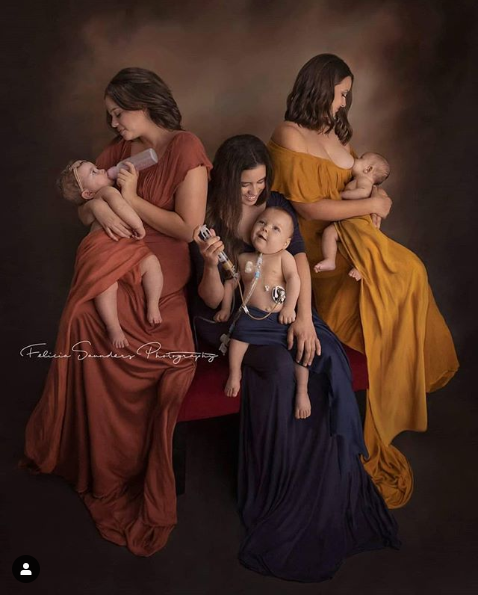
This image popped up in my Instagram feed this morning, reposted by someone in honour of World Breastfeeding Week. For me, this image is everything. Feeding with love and building a bonded connection. Nurturing our precious babies and strengthening our connection by feeding them in whichever is the best possible way for mum and baby is a total joy to see. Women and babies all have different strengths and needs, and it’s so important to be able to freely celebrate the connection and richness that can come when we feel allowed to acknowledge the closeness and intimacy of infant feeding, however it occurs. It’s a co-occupation fundamental for mother-infant (or parent/guardian-infant) bonding, and I love seeing it celebrated in this way. Gorgeous!

Infant feeding
Felicia Saunders Photography